


When a shelter must operate autonomously and the power supply can vanish at any moment, simple and reliable equipment takes center stage. Manual fans are designed specifically for such situations. They allow for the maintenance of vital air exchange in bomb shelters, protective structures, and underground refuges, even when electricity is unavailable. In the event of a long stay in a hermetically sealed space, these devices provide access to fresh air, prevent CO₂ accumulation, and maintain conditions where it is safe to wait out a threat. Ventilator.ua offers electric-manual fans for bomb shelters at favorable prices, perfectly suited to the parameters of a specific protective structure.
When Large Manual Fans Are Needed
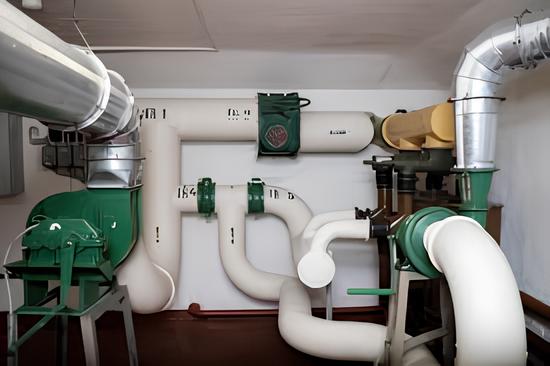
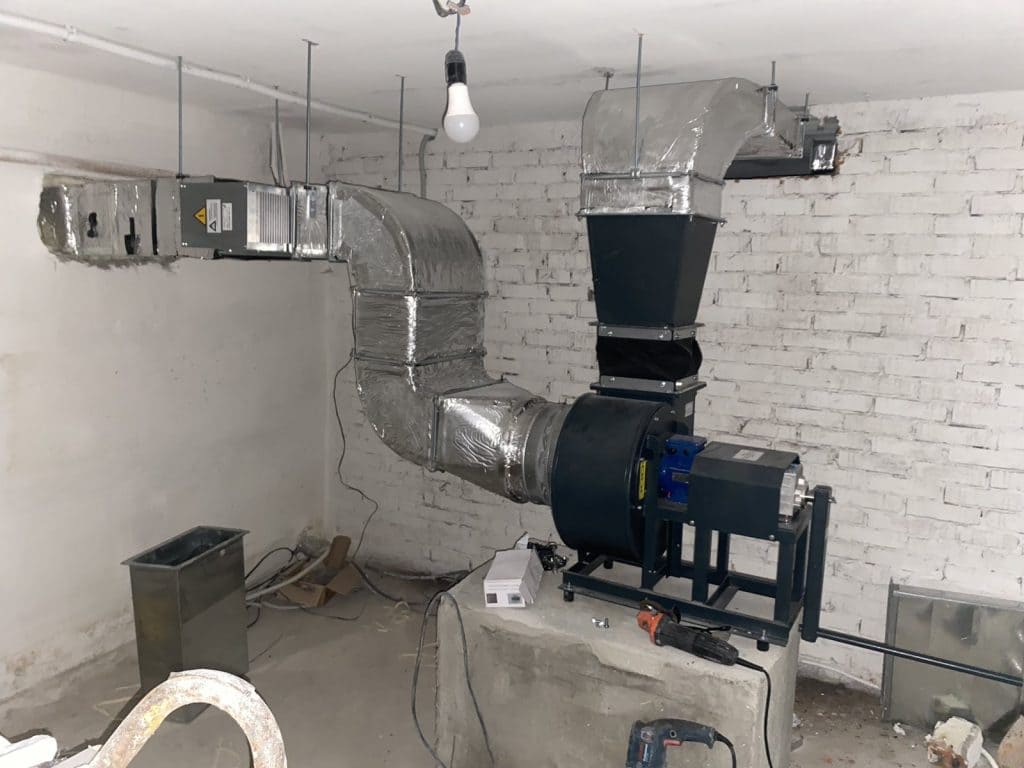
Electric-manual fans (ERV) are generally centrifugal (scroll-type) or axial devices equipped with a dual drive mechanism. A shelter fan is capable of operating in two modes:
- Electric — from a standard three-phase (most often 400 V, 50 Hz) or single-phase power grid using a built-in electric motor.
- Manual — the operator turns a handle, and torque is transmitted to the impeller through a gearbox.
Under normal conditions, an electric-manual fan for shelters is used with a standard motor, supplying air into the intake ventilation duct. If the shelter is left without power, the manual mechanism can be used. Switching between modes occurs automatically or semi-automatically upon activation of the manual drive. This principle ensures that even during a total blackout, the ventilation system will continue to operate and provide air to people.
Shelters/Bomb Shelters, Basements, Industrial Premises Without Stable Power
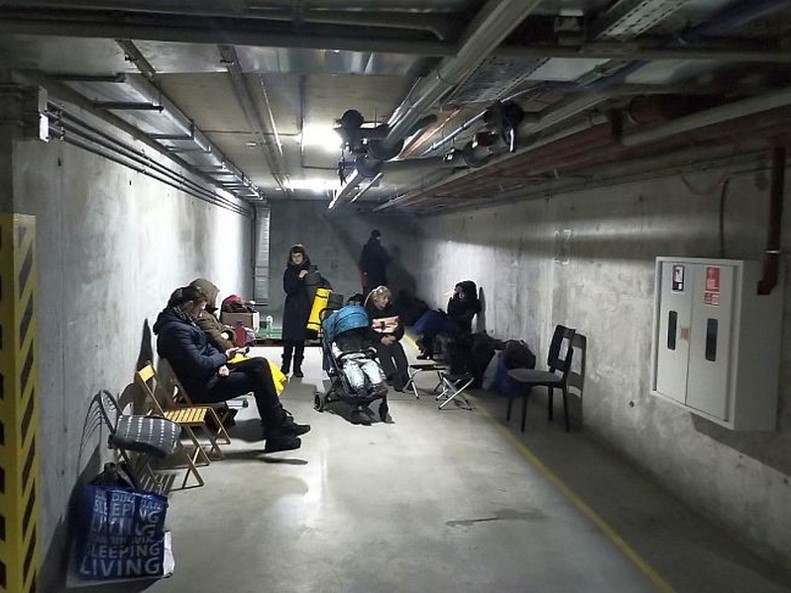
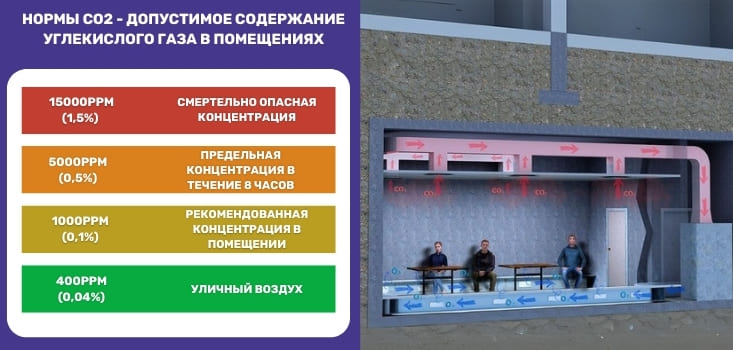
In conditions of war and industrial incidents, the risk of power loss in underground spaces increases. In shelters and bomb shelters, full sealing protects against blast waves and toxic impurities but creates another danger — a rapid decrease in oxygen and an increase in CO₂. If there is no air exchange, people experience headaches, dizziness, and suffocation. Therefore, a bomb shelter fan that can operate in manual mode is placed where people stay for a long time: in the basements of residential buildings, underground workshops, and industrial premises with unstable power. The task of such equipment is to prevent a critical atmospheric change in a space where dense crowds are possible.
As a Backup for Electric Ventilation
When the primary ventilation system fails due to sudden blackouts, an Automatic Transfer Switch (ATS) failure, or fire, the air quality in hidden rooms begins to deteriorate sharply. Smoke, carbon monoxide, or combustion products can quickly reach people if ventilation stops, as it creates overpressure and protection from backdraft. A fan that works without electricity becomes the only means to provide clean air and support evacuation at this moment. In bomb shelters, server rooms, technical tunnels, or factories, such a backup is particularly important: the manual drive allows ventilation to continue when electricity is unavailable, buying time that can save lives.
How an Industrial Manual Fan Works: Design, Drive Type, Efficiency, Noise
Structurally, such solutions provide a dual mechanism: either an electric motor or a manual drive via a gearbox and handle. When electricity is present, the device works as a conventional system; in its absence, it can rotate via mechanical power.
For example, the 49M fan from the ERV series produced by KVZ features a durable casing, an impeller with ergonomic blades, a gearbox mechanism, and a manual drive. The mechanism design is intended for long service, withstanding temperature changes and humidity typical for shelters. The efficiency (COP) of an ERV for bomb shelters depends on several factors:
- Casing shape (often radial, "scroll");
- Outlet diameter;
- Rotation speed;
- Impeller selection.
The manual ventilation mode provides lower capacity than the electric motor but is sufficient to maintain minimal air exchange.
A fan without electricity is quite quiet; its operation does not create discomfort in a closed room. Also, thanks to the thoughtful aerodynamics of the compact casing, the airflow is directed uniformly without turbulence, providing stable cooling or ventilation. Unlike equipment with local suction zones, these models intake air essentially at 360 degrees around the entire circumference of the inlet.
Selection Criteria
When evaluating equipment, not only the catalog parameters but also the conditions in which the bomb shelter fan will be used are taken into account. It is important to predict how often the manual drive will be used, whether the design can operate in an environment with dust or high humidity, and whether the casing can withstand regular transport or accidental impacts. It is wise to check immediately if spare parts and technical support are available for a specific ERV model to avoid future downtime. The Ventilator.ua online store invites you to familiarize yourself with the technical characteristics of the electric-manual fans from "Kyiv Ventilation Plant" LLC. We offer low prices and a long-term manufacturer's warranty.
Required Air Exchange (m³/h) and Network Resistance
When choosing a shelter fan, it is important to consider several parameters. The calculation is based on the number of people: a minimum of 20 m³/h per person (according to construction norms) in clean ventilation mode. If the shelter is designed for 4 people, the system must provide at least 80 m³/h, but a reserve of 60–100 m³/h is usually taken. Next, the complexity of the air duct is evaluated: every turn, valve, or filter adds resistance. For long or branched networks, a fan with a pressure of 200–300 Pa is chosen so that the airflow remains stable even under load.
Drive Ergonomics
In manual mode, the operator must manually turn the handle or gearbox, so it is important that this is not too difficult and is safe even for weaker people. Design nuances are very important: does the fan have a protective shroud, is the handle comfortable, is long-term blowing possible without excessive fatigue? For example, manual fans from the ERV 2022-75 series from Ventilator.ua have a gearbox designed for many revolutions without excessive physical effort. Additionally, the reliability of the switching clutch is important — so that no problems arise when power is restored. A smooth transition between manual and electric modes is required.
Compatibility with Filters/Valves/Silencers
In ventilation systems, every element critically affects performance. Filters trap dust and small particles, valves regulate the airflow direction, and silencers reduce noise and turbulence. A modern bomb shelter fan requires regular filter cleaning, valve status checks, and silencer leak tests. This ensures optimal cooling, safe blowing in hot weather, and long-term equipment operation even in manual mode. Check if the electric-manual fan has filter mounts and if it provides sufficient airflow under load. If the shelter requires purification or has toxic zones, such compatibility is mandatory.
Installation and Safety of Industrial Fans
Using correct fasteners in the ERV design prevents equipment displacement during operation, while careful alignment of the air duct axis ensures stable draft. The direction of airflow provided by the shelter fan and potential obstacles that reduce system efficiency are always considered. Joints in ventilation ducts require special attention, as even a small gap creates losses and unnecessary noise. After installing the bomb shelter fan, a test run is performed to ensure the reliability of every component.
Stationary/Portable, Vibration Isolation, Duct Sealing
A bomb shelter fan is installed according to its purpose: whether the device will be stationary or portable. In a stationary version, vibration isolation is desirable to avoid transmitting vibrations from the ventilation equipment to the shelter structure.
In the case of portable installation, it is important to ensure the tightness of joints and strong mounting of the ERV inlet pipes. Duct sealing must be reliable to avoid air leaks or the penetration of unwanted air from outside.
Safe Distance, Guarding of Moving Parts, PPE
All moving parts of the manual shelter fan — impeller, gearbox, handle — must be enclosed or protected. If the ERV is installed in a place accessible to people, guarding must be provided to avoid accidental injuries. Protection against accidental activation of the electric-manual fan during a sudden power restoration should also be considered. It is also important to ensure reliable mounting of the ventilation device to prevent falls, tilting, or casing damage.
Operation and Maintenance
Shelter fans require regular status checks and readiness for autonomous operation. This allows for avoiding unexpected breakdowns during a long stay in the shelter. Main maintenance tasks for bomb shelter fans include:
- Checking fasteners and seals;
- Inspecting impeller and gearbox play;
- Lubricating bearings (if applicable);
- Checking system tightness;
- Manually turning the blades during long downtime.
Prevention ensures the continuous operation of underground structure ventilation even in critical conditions. Regular fan checks guarantee a safe and comfortable stay in the shelter during autonomous mode.
Industrial Fan Autonomy Checklist
| No. | Checklist Question for ERV Readiness | Completed |
|---|---|---|
| 1 | Is a manual drive provided (gearbox/handle)? | |
| 2 | Is there a supply of hoses or clamps for connection during configuration changes? | |
| 3 | Is a valve installed to prevent backdraft? | |
| 4 | Is an appropriate filter or filter connection provided? | |
| 5 | Are the necessary tools for installation or removal available? | |
| 6 | Is PPE provided for maintenance? | |
| 7 | Is the installation/operation manual kept on-site? | |
| 8 | Are airflow directions and connections marked? |
Quick Industrial Manual Fan Selection
| Premises/Scenario | Area/People | Rate per person (m³/h) | Target Air Exchange Mode 1 (Clean Vent) m³/h | Target Air Exchange Mode 2 (Filtered Vent) m³/h | Approx. Device Capacity m³/h |
|---|---|---|---|---|---|
| 20 m² Shelter, 4 people | 20/4 | 20/10 | 80 | 40 | 200–300 |
| 50 m² Shelter, 6 people | 50/6 | 20/10 | 120 | 60 | 300–400 |
| 30 m² Basement, 2 people | 30/2 | 20/10 | 40 | 20 | 150–250 |
| 40 m² Bomb shelter, 1–2 people | 40/2 | 20/10 | 40 | 20 | 250–350 |
Conclusions + Alternatives: When a Manual Fan is Enough, When a Combined System is Needed
If the room is small, the stay is temporary, or the number of people is insignificant, a compact fan without electricity can provide basic ventilation and comfort. In such cases, it is truly a must-have.
If a long stay is expected, or if the shelter has a large area with a complex duct system or the need for filtration, combined solutions are better. In this case, a stationary electric fan for shelters with manual activation capability should be installed. In this format, the manual option acts as insurance against power loss. You can buy a bomb shelter fan with the required parameters in Ukraine on the Ventilator.ua website. We offer a wide selection of models and delivery across the country and abroad.
For shelters with filtration or a complex duct structure, the ERV 2022-46 electric-manual fan, ERV 49M, or ERV 2022-75 will become part of a comprehensive ventilation system. For the device to be reliable, proper connection, sealing, and regular maintenance must be ensured. Compact models are suitable for small shelters; more powerful models with increased connection diameter and the ability to work under pressure are for large-scale refuges.
In summary—if rapid cooling or air exchange is needed in a shelter during heat, manual drive fans are a temporary but reliable solution. For long-term use, it is better to have a spare mechanism and consider a combined system with both electric and manual drives.
Write a comment